
Browsing more than 10,000 product listings can become difficult when you are looking for one specific item, comparing several sellers, or trying to identify a suitable purchase before international shipping. The litbuy 10 000+ listings collection is most useful when approached as a searchable product directory rather than a list to scroll through from top to bottom. This guide explains how to narrow your search, interpret product information, compare practical specifications, and organize your sourcing process in 2026.
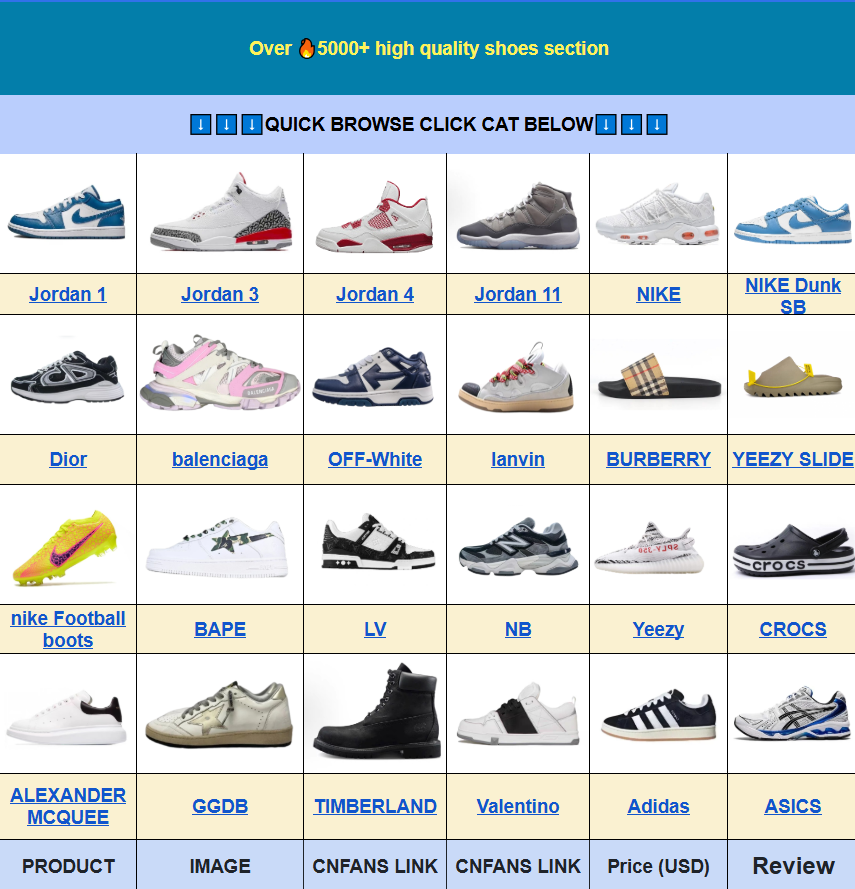
Instead of working through a large, potentially slow Google Spreadsheet, shoppers can begin with the litbuy spreadsheet web catalog, then use categories, search terms, and individual product pages to reduce unnecessary browsing.
Smart Search Tip: Looking for more? To find items instantly, use single-word keywords (e.g., “SHOES” or “T-SHIRT”) instead of long sentences for the best results.
Table of Contents
- Start With a Search Strategy, Not a Scrolling Session
- How to Narrow Thousands of Listings Efficiently
- Read Product Pages as Sourcing Records
- Compare Listings Using Measurable Details
- Use QC Photos to Check the Right Things
- Build a Shortlist Before You Place an Order
- International Shipping: Check the Complete Cost
- Practical Questions About Large Litbuy Catalogs
Start With a Search Strategy, Not a Scrolling Session
A large catalog creates a familiar problem: the more products you see, the harder it becomes to remember why you opened the page. Efficient sourcing begins by defining what you actually need before searching.
Write down three or four requirements. For example, you might be looking for a black zip-up jacket, a particular type of footwear, or a clothing set within a certain budget. You may also need a specific size range, a particular material appearance, or a product suitable for a destination with strict import requirements.
These requirements help distinguish a useful listing from an interesting but irrelevant one. They also prevent a common mistake: selecting a product because its photograph looks appealing before checking its measurements, available options, or total cost.
Turn the search into a short specification
- Product type: jacket, trousers, sneakers, accessories, or another category.
- Visual requirements: color, silhouette, pattern, sole style, or hardware.
- Measurements: foot length, garment dimensions, waist, or other relevant specifications.
- Budget: a target product price, with a separate allowance for shipping and other applicable charges.
- Destination: the country where the parcel will be delivered.
You do not need a perfect specification at the beginning. A basic description is enough to start; refine it after examining the first relevant results.
How to Narrow Thousands of Listings Efficiently
The most efficient browsing pattern is broad-to-narrow. Start with a recognizable category or short search term, identify a manageable group of products, and then inspect individual pages.

1. Begin with the closest category
Category navigation is useful when you know the general product type but do not yet have a precise search phrase. A jacket search, for example, is more productive when it begins in an outerwear category than in a directory containing every type of product.
For clothing, distinguish between categories that may look similar in a broad search. Hoodies, jackets, sets, and trousers can have different measurement conventions and different practical inspection points. Starting in the right category reduces irrelevant results and makes comparisons more meaningful.
2. Use short, recognizable keywords
Search terms should describe the item rather than an entire shopping intention. Words such as “hoodie,” “cargo,” “running,” “leather,” or “black” can be useful starting points when the catalog supports those terms. Try a second, simpler word if the first search returns too few results.
Long natural-language questions may not match the way product titles or seller descriptions are indexed. If a search for “lightweight black jacket for autumn travel” produces weak results, test “black jacket,” then refine the shortlist manually using the product information.
3. Use a two-pass browsing method
During the first pass, scan only the product image, title, visible price, and broad relevance. Do not spend several minutes studying every listing. Save or record the products that appear to meet your initial requirements.
During the second pass, examine the shortlisted pages in detail. Check the available sizes, measurements, seller information, product options, photos, and any sourcing notes. This approach is more efficient than giving every listing the same amount of attention.
4. Keep a simple comparison record
For several potential purchases, record the product link, listed price, size information, key uncertainties, and any QC questions. A small personal comparison list is often easier to manage than repeatedly reopening dozens of browser tabs.
Read Product Pages as Sourcing Records
A product page is not necessarily a complete technical specification sheet. It may contain useful images and seller-provided details, but the amount of information can vary between listings. Read each page for what it actually establishes, and separate confirmed details from assumptions.
What deserves attention first?
- Product title and description: Look for the stated product type, model details, options, and any limitations in the description.
- Price and variations: Check whether the displayed price applies to every option or only a particular size, color, or configuration.
- Measurements: Look for a size chart, dimensions, insole length, garment measurements, or other relevant numerical information.
- Seller-provided images: Check whether they show the actual item, a representative product, or only a promotional image.
- Source and purchasing information: Confirm what information is available for the external agent or shopping platform that will handle the order.
A product image can help establish the apparent shape, color, and visible design. It cannot, by itself, establish exact fabric composition, long-term durability, or how comfortable an item will be after extended use.
If a listing lacks a measurement chart or leaves a key detail unclear, treat that as an unresolved question. Do not fill the gap with assumptions based on a familiar brand, photograph, or generic size label.
Compare Listings Using Measurable Details
When two products look similar, the cheapest listed price is not always the most useful deciding factor. The better choice depends on the specifications that matter for the intended use, the clarity of the product information, and the additional costs involved.
| Product type | Details to compare | Why the detail matters |
|---|---|---|
| Jackets and hoodies | Chest width, length, shoulder width, sleeve length, material description | Helps assess fit, layering space, and the difference between similar silhouettes. |
| Trousers and shorts | Waist, hip, inseam, outseam, leg opening | Shows how the garment may fit beyond a simple S, M, L, or XL label. |
| Shoes | Foot length, insole length, size chart, sole construction | Supports a more careful size decision and highlights construction details worth inspecting. |
| Accessories | Dimensions, hardware, closures, material description, weight where provided | Helps distinguish visual similarity from practical differences in size and construction. |
Why generic sizing labels are insufficient
Manufacturers can use different size systems, and measurements may vary between product batches or styles. A usual retail size in the US, UK, EU, Australia, or another market should be treated as a starting reference, not a guarantee.
For clothing, compare your own measurements with the seller’s chart. Check whether the listed chest measurement refers to the garment circumference or a flat measurement across the chest. A flat width of 58 cm, for example, is not the same as a 58 cm chest circumference.
For footwear, measure your foot length and compare it with the stated insole length or the seller’s sizing guidance. Allow for the intended fit, sock thickness, and the possibility that the chart uses a different measurement convention. If the listing does not explain the measurement method, the comparison has more uncertainty.
For accessories, dimensions can matter more than the product name. A bag, wallet, belt, or other item may look similar in photographs while differing substantially in width, height, capacity, or hardware layout.
Use QC Photos to Check the Right Things
Quality-control photos are valuable because they may reveal details that are difficult to judge from a catalog thumbnail. They should be used as visual evidence, not as proof of every property of the product.
A practical QC inspection checklist
- Overall shape: Does the item appear symmetrical, correctly structured, and consistent with the listing?
- Stitching and seams: Look for visibly uneven stitching, loose threads, open seams, or obvious construction defects.
- Color and graphics: Compare visible color consistency, print alignment, and graphic placement with the product description or reference images.
- Hardware and closures: Inspect zippers, buttons, buckles, eyelets, and other visible components for damage or misalignment.
- Footwear construction: Examine the visible sole, upper, heel, stitching, and general symmetry.
- Labels and tags: Check whether visible tags, printed information, and labels correspond to the selected product options.
- Packaging: Look for visible damage or missing packaging elements if those details matter to your order.
Photo quality affects what can be evaluated. A close-up may reveal a loose thread, but a distant image may not show fine stitching clearly. Lighting can also change how colors appear. If a defect or mismatch is important, request clarification or additional evidence through the relevant purchasing agent before proceeding.
QC images cannot definitively confirm fabric composition, chemical composition, long-term durability, authenticity, or performance after months of use. They are most useful for checking visible condition and comparing the physical appearance with the available product information.
Build a Shortlist Before You Place an Order
After narrowing the catalog, avoid treating every plausible listing as an immediate purchase. A shortlist of three to five candidates can make the final decision more deliberate, especially when several products share a similar appearance.
The shortlist decision sequence
- Remove irrelevant products. Eliminate listings that do not match the required category, design, or intended use.
- Resolve measurement uncertainty. Remove or flag items with unsuitable dimensions or missing critical size information.
- Review visible quality signals. Compare product photographs and available QC information without assuming that appearance proves durability.
- Compare total cost. Consider product price, applicable service charges, international shipping, and any other confirmed costs.
- Check ordering details. Confirm the seller link, selected variation, destination, and the process used by the external shopping agent.
From a sourcing perspective, an inexpensive item with unclear measurements may be less useful than a slightly more expensive listing with clearer specifications. The right decision depends on the buyer’s priorities, not on price alone.
When a product page needs more investigation
Pause before ordering if the title and photographs appear inconsistent, the selected variation is unclear, the size chart does not match the item, or an important feature is absent from the description. It is better to resolve uncertainty before payment than to rely on assumptions that may be difficult to correct later.
The catalog is primarily a discovery and sourcing-information platform. Product selection and comparison happen on the website, while the external shopping agent or platform handles the actual purchase and its applicable procedures. Check the current terms and available options of the relevant service before placing an order.
International Shipping: Check the Complete Cost
A product price is only one part of the sourcing decision. For buyers in the US, Canada, the UK, the EU, Australia, New Zealand, and other destinations, the final cost can depend on parcel weight, dimensions, shipping route, carrier, customs treatment, and applicable taxes or duties.
Do not estimate delivery time or tax liability from the product page alone. Rules and service availability vary by destination, and the applicable information may change. Check the current shipping and customs guidance for your country before committing to an order.
Questions to answer before ship-out
- What is the estimated parcel weight and are volumetric dimensions relevant?
- Which shipping methods are available for the destination?
- Are the quoted charges for delivery only, or do they include other applicable fees?
- Will the shipment be handled under DDP, DDU, or another arrangement?
- Could VAT, GST, duties, customs processing, or other charges apply?
- Are any products restricted or subject to special import or biosecurity requirements?
For EU destinations, review the current VAT and customs guidance applicable to the shipment. For Australia and New Zealand, check the relevant GST, import, and biosecurity requirements. For the UK, US, Canada, and other markets, confirm the rules that apply to the product and delivery method rather than assuming that the same arrangement works everywhere.
Combining several products may change the shipping calculation because weight, dimensions, and packaging affect the parcel. Consolidation can be useful, but it should be evaluated using the actual available shipping estimate rather than a blanket assumption that combining orders is always cheaper.
Practical Questions About Large Litbuy Catalogs
Q: What is the best way to search a catalog with more than 10,000 listings?
A: Begin with the closest product category and a short, recognizable keyword. Narrow the results, shortlist relevant items, and then compare the detailed product pages. Avoid scrolling through the entire catalog without a specific search objective.
Q: Why should I use measurements instead of my usual clothing size?
A: Size labels vary between manufacturers and product batches. A seller’s chest, waist, hip, garment-length, or sleeve measurements provide a more useful comparison than assuming a familiar retail size will fit the same way.
Q: Can QC photos confirm the quality of a product?
A: They can reveal visible issues such as uneven stitching, damaged hardware, color differences, or shape inconsistencies. They cannot conclusively establish durability, fabric composition, authenticity, or long-term comfort.
Q: Should I choose the lowest-priced listing?
A: Not automatically. Compare the product specifications, available information, visible condition, variation, and total expected cost. A lower price may not compensate for missing measurements or unresolved product details.
Q: Does the website complete the international purchase itself?
A: The website is designed for product discovery, browsing, comparison, and sourcing information. The external shopping agent or platform handles the purchase process. Review its current ordering, shipping, and applicable fee information before proceeding.
Q: What should I do if a listing does not provide enough information?
A: Mark the missing detail and look for another listing with clearer information. If the product remains a strong candidate, seek clarification or additional evidence through the relevant purchasing service before ordering.
Efficient sourcing from a large catalog is less about viewing the greatest number of products and more about reducing uncertainty at each stage. Use category navigation and short searches to find relevant listings, compare measurable specifications, inspect available QC evidence carefully, and check the full delivery cost before making a decision. A structured shortlist turns a large directory into a more manageable sourcing workflow.