
Small businesses and startups often have a sourcing problem before they have a sales problem: there are too many products, inconsistent seller information, unfamiliar measurements, and large spreadsheets that are difficult to search efficiently. A practical Litbuy sourcing toolkit can turn that research process into a more manageable workflow by combining product discovery, listing comparison, QC review, specifications, and international order planning.
The key is not simply finding more products. A useful sourcing process helps you narrow a large catalog into a small group of listings that are worth investigating, then checks the details that could affect your margins, customer satisfaction, and shipping costs before an order is placed.
For businesses using the catalog as a research layer, the litbuy spreadsheet provides a web-based way to browse sourcing information before moving to an external shopping agent or ordering platform.
Smart Search Tip: Looking for more? To find items instantly, use single-word keywords (e.g., “SHOES” or “T-SHIRT”) instead of long sentences for the best results.
- Build the Toolkit Around a Real Sourcing Workflow
- What Small Businesses Should Record for Every Product
- How to Compare Listings Before Ordering Samples
- Use QC Photos as a Decision Checkpoint
- Measurements Matter More Than Retail Size Labels
- Plan Shipping Before the Cart Gets Large
- A Repeatable Workflow for Your Next Product Drop
- FAQ for Small-Business Sourcing
Build the Toolkit Around a Real Sourcing Workflow
A sourcing toolkit becomes useful when each stage answers a different question. Product discovery answers what might I sell? Listing research answers what exactly am I getting? QC review answers does the delivered item appear consistent with the listing? Cost planning answers does this still make sense after shipping and other applicable charges?
For a startup, these stages should remain separate. A product that looks attractive in a catalog is not automatically a product worth ordering. Likewise, a low listed price does not necessarily produce the lowest landed cost.
A simple workflow is:
- Discover: Search the catalog by product type, material, style, or other useful terms.
- Shortlist: Keep several potentially suitable listings rather than committing to the first result.
- Inspect: Compare photographs, measurements, construction details, and seller-provided specifications.
- Verify: Use available QC information to identify visible issues before shipment.
- Calculate: Estimate product, domestic handling, international shipping, and other applicable costs.
- Test: Start with a controlled quantity when the product is new to the business.
- Review: Record what worked and use that information when sourcing the next batch.
This approach is particularly useful for businesses that need a broad product selection without spending hours scrolling through a raw spreadsheet. The catalog becomes a research interface rather than the final purchasing destination.

What Small Businesses Should Record for Every Product
One of the easiest mistakes in sourcing is comparing products using only the displayed price and thumbnail. For a business, a product record should contain enough information to support a later decision without requiring the entire research process to be repeated.
| Information | What to Record | Why It Matters |
|---|---|---|
| Product identity | Product type, style, color and relevant variant | Prevents similar listings from being mixed together |
| Price | Current listed price and variant-specific differences | Useful for margin calculations and comparisons |
| Measurements | Seller dimensions or size-chart measurements | Reduces avoidable sizing errors |
| Materials | Seller-provided material information | Helps establish product expectations, although claims should be verified where necessary |
| QC information | Available photos and visible observations | Provides a pre-shipment inspection checkpoint |
| Shipping profile | Weight, dimensions and packaging information when available | Helps assess the potential effect on international shipping |
For small businesses, consistency is more valuable than maintaining an enormous list. Ten well-documented candidates are generally easier to compare than dozens of links with missing measurements and unclear variants.
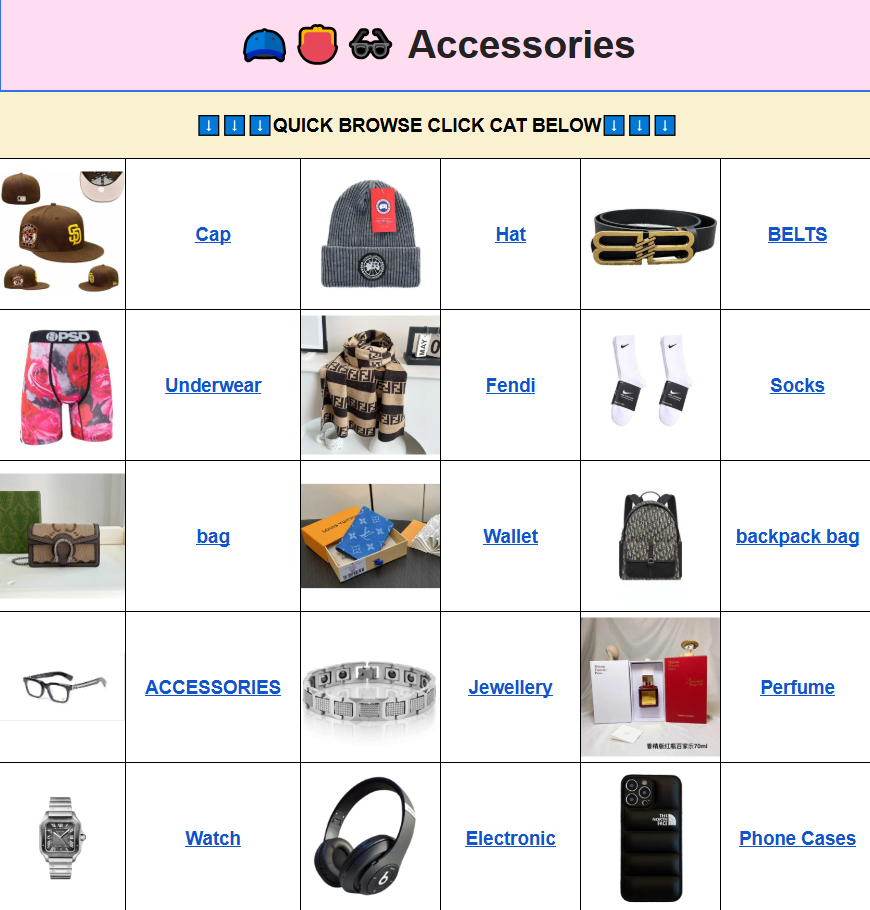
Accessories are a useful example because apparently small differences can affect both customer expectations and shipping. A bag, belt, cap, wallet, or other accessory may have multiple dimensions, materials, hardware configurations, and packaging options. Businesses researching these products can use the litbuy spreadsheet accessories category to narrow research to a relevant product group rather than searching the entire catalog.
How to Compare Listings Before Ordering Samples
Two listings can look almost identical in a thumbnail while being materially different in construction, measurements, packaging, or included components. Comparing the underlying specifications is therefore more useful than comparing photographs alone.
Start with the attributes that matter most to the product’s intended use. For apparel, that might be garment measurements and fabric information. For bags, it could be dimensions, strap length, closure type, lining, and hardware. For small accessories, weight and packaging can also become relevant when the business plans to ship multiple units internationally.
Use a shortlisting threshold
Rather than attempting to investigate every available listing, establish a minimum information threshold. A candidate might need clear product photographs, a recognizable variant structure, usable dimensions, and enough seller information to understand what is actually included.
Remove listings when critical information remains unclear. This does not mean the product is necessarily poor; it means the listing creates additional uncertainty for a business that needs predictable purchasing decisions.
Separate price from value
A lower product price can be attractive, but it should be considered alongside specification consistency, packaging, expected weight, and the likelihood of needing replacements or customer-service intervention. Conversely, a higher-priced listing may not automatically justify its premium.
The practical question is whether the additional cost corresponds to a feature that matters to your customers. For a startup testing demand, this distinction can prevent unnecessary spending before the product-market fit is established.
Use QC Photos as a Decision Checkpoint
QC photographs are most useful when treated as evidence of visible condition rather than a complete quality certificate. They can help a buyer inspect what is physically visible before deciding whether to proceed with shipment.
Depending on the product, useful checkpoints include:
- Stitching that appears loose, uneven, or unfinished.
- Misaligned prints, graphics, or decorative elements.
- Visible scratches, stains, dents, or other surface defects.
- Color differences between corresponding components.
- Symmetry and overall shape.
- Zippers, buckles, buttons, snaps, and other visible hardware.
- Tags, labels, and included accessories.
- Dimensions that can be compared with the seller’s stated specifications when measurements are available.
For a business, the important habit is to define what needs checking before QC images arrive. If you are selling a structured bag, for example, inspect shape, seams, hardware and dimensions. If you are evaluating a printed item, look closely at alignment, placement and visible surface defects.
QC photographs cannot reliably establish everything a business may eventually want to know. They generally cannot prove long-term durability, exact material composition, chemical properties, extended comfort, or performance after repeated use. Those questions require appropriate additional evidence or testing.
A useful QC note should therefore say something specific, such as “hardware appears aligned in the available photos,” rather than making a broad claim that the entire product is high quality.
Measurements Matter More Than Retail Size Labels
Sizing is one of the easiest ways for an international sourcing project to create avoidable returns or customer complaints. Manufacturer sizing systems do not necessarily correspond directly with the S, M, L or XL labels customers know from local retailers.
When measurements are available, record the actual numbers. For clothing, useful measurements can include chest width, shoulder width, garment length, sleeve length, waist and hip measurements. For footwear, foot length and insole length can be more informative than the displayed size alone. Accessories may require product length, width, height, strap length or circumference.
| Product Type | Useful Specification | Comparison Method |
|---|---|---|
| Shirt or jacket | Chest, shoulder, sleeve and garment length | Compare with a garment that already fits |
| Trousers | Waist, hip, rise and inseam | Measure a suitable existing pair |
| Shoes | Foot length and insole length | Measure the foot and compare with the seller information |
| Bag | Length, width, height and strap length | Compare against the capacity required for actual use |
| Accessories | Dimensions, circumference or component size | Match the measurement to the intended customer or product use |
Keep the original measurement unit visible when documenting a product and convert units carefully when presenting information to customers in another market. A small numerical difference can become significant when a product is close to a customer’s preferred fit.
Plan Shipping Before the Cart Gets Large
Shipping should enter the sourcing calculation before a startup has accumulated a large cart. Product cost is only one part of the eventual purchasing equation, and international delivery arrangements vary by destination and service.
For buyers in the US, Canada, UK, EU, Australia, New Zealand and elsewhere, the applicable customs, VAT, GST, duties, import procedures and carrier requirements depend on the destination and shipment. Rules can also change, so businesses should check current official guidance for their own market rather than relying on a general statement found in a sourcing community.
Weight and package dimensions deserve particular attention. Some international services calculate charges using actual weight, while others may apply dimensional or volumetric calculations. Packaging that adds substantial volume can therefore affect shipping even when the underlying product is relatively light.
Think in landed-cost ranges
For early product testing, it is often more realistic to work with a range instead of pretending that the final landed cost is known exactly. Track:
- Product price.
- Applicable domestic or agent-related charges.
- International shipping.
- Potential taxes, duties or import charges where applicable.
- Packaging or consolidation effects.
- Possible replacement or quality-control costs.
Do not assume that DDP, DDU or another shipping arrangement works identically in every destination. Before a commercial order, confirm which party is responsible for applicable import charges and what the selected service actually includes.
For a startup, the first objective is often predictable economics rather than the absolute lowest shipping quote. A slightly different shipping method may be easier to budget if its terms and responsibilities are clearer.
A Repeatable Workflow for Your Next Product Drop
Once the research process is documented, it can become a repeatable sourcing system rather than a one-off search exercise.
1. Start with the customer, not the catalog
Define the product type, target price range, expected use, preferred dimensions and any requirements that would make a listing unsuitable. This gives your search a filter before you open dozens of product pages.
2. Create a short candidate list
Collect several listings and record the same core fields for each. Avoid adding products simply because they look interesting. Every additional candidate creates more comparison work.
3. Verify measurable specifications
Check dimensions, variants, weight and other measurable attributes. If a critical specification is absent, mark it as unknown rather than filling the gap with an assumption.
4. Review QC information
Use available photographs to inspect visible condition and compare the actual item with the listing description. Record specific observations instead of broad quality judgments.
5. Calculate the international cost
Consider the product, packaging, shipping and destination-specific import obligations. Keep uncertain costs clearly separated from confirmed figures.
6. Test before scaling
A small initial order can provide information about dimensions, packaging, consistency and customer response before a business commits more capital. For products intended for resale, keep records of the exact listing and variant associated with each test.
7. Turn successful research into a sourcing record
When a product meets the business’s requirements, retain the relevant measurements, listing information, QC observations and cost assumptions. Future sourcing then starts from an informed baseline rather than from zero.
FAQ for Small-Business Sourcing
Q: What makes a sourcing toolkit useful for a small business?
A: It organizes product discovery, specifications, QC observations, cost information and purchasing decisions into one repeatable process. The goal is to reduce research friction and make comparisons easier.
Q: Should I compare several listings instead of choosing the cheapest one?
A: Yes, comparison is useful when differences in dimensions, construction, packaging, variants or shipping characteristics could affect the business. Price should be one input rather than the only filter.
Q: Can QC photos confirm product quality completely?
A: No. They are useful for visible details such as stitching, alignment, color consistency, hardware and obvious defects, but they cannot establish every characteristic, including long-term durability or exact material composition.
Q: How should a startup handle product sizing?
A: Use actual manufacturer dimensions whenever possible. Compare measurements with a known suitable product instead of assuming that a familiar S, M, L or shoe-size label will fit the same way across manufacturers.
Q: What should international buyers check before shipping?
A: Check the selected shipping service, package dimensions and weight, destination-specific customs requirements, and whether applicable taxes or import charges are included or separately payable. Requirements vary by destination.
Q: Is a web catalog better than working directly from a large spreadsheet?
A: A web catalog can make discovery and filtering more convenient because product information is presented in a familiar product-page format. The underlying sourcing information still needs to be evaluated carefully before an external order is placed.
For small businesses and startups, the strongest sourcing system is not the one containing the most links. It is the one that makes each product easier to evaluate consistently. Use the catalog to discover candidates, compare measurable specifications, inspect available QC evidence, estimate international costs, and retain useful records after each test order. That turns a large product directory into a practical research workflow that can support future product decisions without repeating the same work from scratch.