
Few things frustrate online buyers more than discovering an ideal product entry only to click through and hit an error page. Sourcing lists depend heavily on active store pages, yet marketplace inventory changes rapidly. Stores close, listings cycle out, and item paths shift without notice. If you rely on curated spreadsheets to discover apparel, shoes, or gear, learning how to avoid dead links in litbuy sourcing lists saves time and prevents dead-end searches. By adjusting how you browse, verify, and store item details, you can build a far more reliable sourcing workflow.
Smart Search Tip: Looking for more? To find items instantly, use single-word keywords (e.g., “SHOES” or “T-SHIRT”) instead of long sentences for the best results.
Why Links Go Dead in Sourcing Spreadsheets
To fix a broken link issue, it helps to understand why marketplace URLs disappear in the first place. Overseas sellers operate in high-turnover environments. A listing that works perfectly on Monday might vanish by Friday for several distinct reasons:
- Inventory Depletion: When a specific batch sells out entirely, sellers frequently delist the entry rather than leaving an out-of-stock page active.
- Storefront Migration: Independent sellers routinely refresh their digital storefronts or open new accounts to reorganize their inventory categories.
- Item Restructuring: Merchants often merge multiple item options into a single master listing or split a large listing into individual colorways.
- Static Spreadsheet Neglect: Standard Google Sheets rely on manual updates by individual creators. When a curator stops maintaining the file, dozens of links degrade over time.
Understanding these mechanisms shifts your approach from passively clicking old links to actively using dynamic catalog resources and smart verification techniques.
Top 10 Practical Tips to Avoid Broken Links
Applying structured habits drastically reduces the time spent staring at “404 Not Found” or expired seller pages. Here are ten practical strategies for international shoppers.

1. Switch to Web-Based Catalog Directories
Traditional static spreadsheets require manual checking, which means dead URLs linger indefinitely. Web-based interfaces aggregate data from multiple sourcing sheets and index them into structured storefronts. Using a web directory like the lit buy spreadsheet platform allows you to browse live inventory with updated data feeds rather than relying on an unmaintained flat file.
2. Save the Seller’s Store ID, Not Just the Item Link
When an individual item link breaks, the merchant’s main store often remains operational. Copying the seller or store identifier into your notes gives you a direct path back to their active inventory. If a specific product page disappears, searching within that seller’s active store usually reveals the updated listing under a new URL.
3. Use Single-Word Keywords for Item Fallbacks
Searching for complex, multi-word titles across marketplace platforms often fails when a specific link breaks. When a link expires, take the core item descriptor—such as “hoodie,” “runner,” or “backpack”—and run a focused search within active listing directories. Broad terms return broader listing pools, making it easier to spot the exact batch from another active seller.
4. Bookmark Web Catalog Sub-Categories
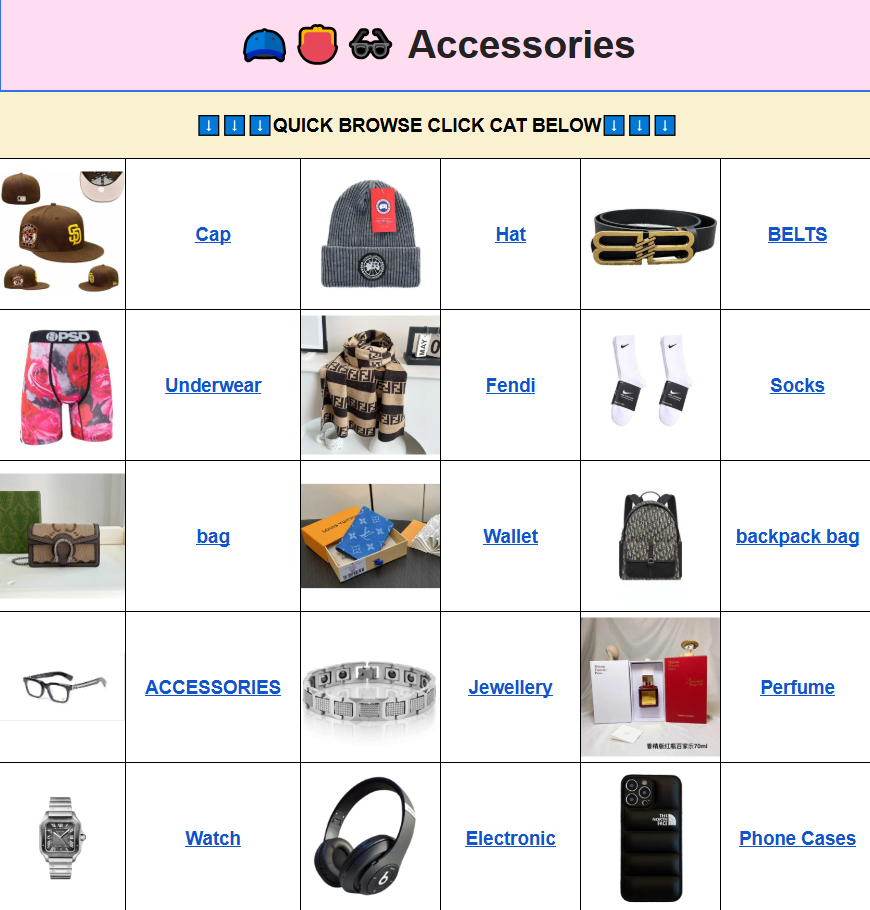
Instead of saving single item links to your browser bookmarks, bookmark specific category pages. If you are specifically sourcing small everyday items, keeping a direct link to a updated category like litbuy spreadsheet accessories ensures that even if an individual product listing expires, you still have instant access to hundreds of verified, active alternatives in the same niche.
5. Verify Link Recency via Sheet Update Stamps
If you must use a standard spreadsheet, check the revision history or “last updated” header. A list that hasn’t been modified in six months will typically have a link failure rate exceeding 30%. Prioritize community lists or dynamic databases that show recent maintenance activity.
6. Utilize QC Photo Databases for Reverse Lookup
Whenever a link breaks, check whether previous buyers generated Quality Control (QC) inspection photos. QC archives store the original product parameters, seller names, and associated batch tags. Entering the product details found in past QC records into a search bar frequently uncovers the seller’s new listing page.
7. Archive Factory Product Codes
Experienced buyers know that manufacturers and factory batches often use specific alphanumeric identifiers. Record these item codes alongside your bookmark. If a URL goes dead, searching the exact factory code across active agent search tools often pulls up identical listings from alternative sourcing suppliers instantly.
8. Rely on External Shopping Agent Search Caches
When you paste an item link into an external shopping agent, the agent interface often caches the item’s details, title, and seller name. If the direct marketplace link later fails, checking your shopping agent search history or saved basket items may still display the cached title and seller details, allowing you to track down the replacement item easily.
9. Avoid Purchasing from “Ghost Stores”
A “ghost store” is a listing page left online with zero transaction history or unresponsive customer service indicators. While the link itself isn’t technically dead, the listing is functionally inactive. A useful checkpoint is to verify whether the seller has recent sales activity before adding an item to your shipping agent cart.
10. Maintain a Personal Sourcing Backup Log
When you find an item with great sizing charts, clear material notes, and high-quality construction, don’t rely on keeping the browser tab open. Save the seller name, batch code, key measurements, and primary product photos into a personal notes document. Having this metadata guarantees you can re-source the item even if the original listing vanishes entirely.
Evaluating Web Catalogs vs Traditional Spreadsheets
Choosing the right format for discovering products makes a substantial difference in link reliability and browsing speed. The table below outlines how traditional static spreadsheets compare against modern web-based catalog tools.
| Feature / Dimension | Traditional Google Spreadsheet | Web-Based Product Catalog |
|---|---|---|
| Link Maintenance | Manual updates by list owner; high rate of broken links over time. | Automated aggregation and structured indexing reduce dead link encounters. |
| Browsing Speed | Slow on mobile devices; laggy when loading thousands of rows. | Fast response, WooCommerce-style layout optimized for all screens. |
| Search Capability | Basic Ctrl+F text matching; easily cluttered by inconsistent naming. | Categorized filtering, single-keyword search, and clear visual grids. |
| Product Information | Plain text cells; requires clicking out to view images or details. | Visual previews, embedded specs, and direct redirect to external shopping agents. |
Verifying Specifications and Product Data Before Ordering
Preventing dead links is only half the battle; ensuring the active link leads to a suitable item is equally critical. Sizing conventions, material formulations, and manufacturing cuts vary significantly between individual factories.
When reviewing item listings for clothing or wearable accessories, never rely solely on standard labels like Small, Medium, or Large. A Size L from one factory batch may match a Western Size S. Instead, inspect the seller’s published measurement tables, focusing on key metrics:
- Chest Width (Garment Pit-to-Pit): Compare this measurement against a comfortable shirt you already own laying flat.
- Total Length: Measure from the top shoulder seam to the hemline to prevent receiving oversized or cropped fits.
- Shoulder Breadth: Crucial for structured coats, jackets, and tailored cuts to ensure proper silhouette alignment.
- Insole Length (Footwear): Always measure foot length in centimeters rather than trusting regional shoe size conversions.
In practice, smart shoppers compile these physical measurements prior to placing orders through external purchasing agents, ensuring that even if a listing changes slightly, the precise sizing specifications remain clear.
Quality Control and Seller Tracking Strategies
When items arrive at an external shopping agent’s warehouse, you will typically receive Quality Control (QC) inspection photographs. Evaluating these photos effectively prevents shipping unsatisfactory items across international borders.
Realistically, photo inspections can confirm visual details such as print alignment, visible stitching flaws, hardware functionality (zippers, buckles), correct colorways, and physical dimensions using a tape measure. However, photos cannot verify long-term fabric durability, chemical odor, or exact fabric softness. Below is a checklist of what to inspect during the warehouse window:
- Symmetry & Alignment: Ensure pocket placement, collar structure, and graphic prints are properly centered.
- Measurement Cross-Checking: Request a close-up photo with a tape measure placed across key areas (like chest width or waist) to confirm the item matches the seller’s size chart.
- Hardware Functionality: Look for scratch protection on metal tags and verify zipper tracks are fully aligned.
- Color Consistency: Account for bright warehouse lighting, but check for noticeable shade differences across panel seams.
For international buyers in regions like the US, EU, UK, or Australia, resolving defects while the item remains in the Chinese warehouse is simple. If the item fails inspection, your agent can initiate an exchange or return with the seller before expensive international shipping fees are incurred.
Frequently Asked Questions
Q: What is the litbuy Spreadsheet website?
A: It is a dedicated web directory platform that converts large, complex spreadsheet product lists into a clean, searchable product catalog. Rather than scrolling through slow Google Sheets rows, users can search, filter, and review sourcing information in a modern catalog format before redirecting to an external agent to complete their purchase.
Q: How do I find items if a direct spreadsheet link is broken?
A: Use single-word keywords inside the web catalog search bar, search using factory item codes, or look up past QC photo records to identify active replacement listings from the same or similar sellers.
Q: Can I do QC review on a phone screen?
A: Yes, though zooming in on high-resolution inspection photos is recommended. Look closely at measurement tape photos and structural seams rather than relying on quick thumbnail views on a small screen.
Q: How does shipping to Europe work when ordering via agents?
A: When items are ready at the agent warehouse, you choose an international shipping line to your home country. For EU destinations, duty-free or IOSS-compliant shipping lines are widely available, allowing taxes to be settled up front to streamline customs clearance.
Q: What should I do if a seller link goes dead right after I place an order?
A: If your order was already processed by your agent, the seller has likely fulfilled the item from remaining stock. Your agent will update you once the item arrives at the warehouse. If the seller cannot fulfill it, the agent will issue a full refund to your account balance.
By shifting from static spreadsheets to dynamic catalog tools, bookmarking store identifiers, and maintaining clear inspection criteria, you can avoid dead links in litbuy sourcing lists and streamline your entire international sourcing workflow.