
Smart Search Tip: Looking for more? To find items instantly, use single-word keywords (e.g.,”SHOES” or “T-SHIRT”) instead of long sentences for the best results.
If you have ever opened a massive Google Sheet packed with thousands of product links only to watch it freeze, stutter, or take forever to load on your phone, you already know the frustration. That lag is exactly why the team behind Litbuy Spreadsheet built a clean web version of their 2026 catalog. Instead of fighting with slow spreadsheets, you get a fast, categorized storefront that lets you browse more than 10,000 QC-checked finds and jump straight to trusted purchasing platforms.
This guide walks through what the site actually is, how it connects to Litbuy, why the web format beats traditional sheets, and which categories are worth exploring right now. Everything is written for global English-speaking shoppers who want clear information without the usual hype.
What Is the Litbuy Spreadsheet Website?
At its core, litbuy spreadsheet is a web layer placed on top of carefully curated product data. The original information lives in large Google Sheets that track items from Chinese marketplaces. Those sheets are powerful but become slow once they pass a few thousand rows. The website takes that same data, organizes it into product pages and category archives, and serves it through a WooCommerce-style preview system.
You do not buy anything directly on the site. You browse photos, check QC images, read basic details, and then click an external link that sends you to a purchasing agent platform to complete the order. This “preview-and-redirect” model keeps the site light and fast while still giving you everything you need to decide.
The 2026 batch currently holds more than 10,000 entries. New items are added regularly, and dead links are cleaned out so the catalog stays usable. Categories range from everyday apparel to specialty items such as watches, perfume, Lego sets, and glasses. The goal is simple: give global shoppers a reliable starting point without forcing them to wrestle with laggy spreadsheets.

How It Relates to Litbuy
Litbuy functions as the shopping agent that actually places the order, receives the item in its warehouse, performs quality checks, and ships internationally. The spreadsheet website is an independent discovery layer built to make that process smoother. Think of the site as a well-organized catalog and Litbuy as the fulfillment partner.
Because the two work together, most product cards include the information an agent needs: seller links, batch notes, and QC references. Once you choose an item, the external checkout takes you into the Litbuy flow (or another compatible agent) where you pay the product price plus standard service and shipping fees. The website itself never handles payment or customer support for orders—that stays with the agent.
This separation keeps the browsing experience focused and quick. You research here, order elsewhere, and track everything through the agent’s dashboard.
Why Not Stick With Google Sheets?
Google Sheets remain excellent for collaboration and data entry, but they were never designed as consumer shopping interfaces. Large files with thousands of rows, embedded images, and frequent edits quickly run into performance walls—especially on mobile connections or older devices.
Common pain points include:
- Long initial load times once the sheet exceeds a few thousand entries
- Difficulty filtering or searching on phones
- Broken image previews or slow-loading QC photos
- Cluttered columns that make it hard to compare options quickly
The web version solves these by converting the data into structured pages. Category archives load almost instantly, search works with simple single-word terms, and QC images appear in a clean gallery format. Users report that the same catalog that once took 10–15 seconds to open in Sheets now appears in under a second on the site.
| Aspect | Traditional Google Sheets | Litbuy Spreadsheet Website |
|---|---|---|
| Load speed (10k+ rows) | Often 8–20 seconds | Typically under 1 second |
| Mobile experience | Scrolling and filtering feel heavy | Responsive category pages |
| QC photo viewing | Embedded or linked, can lag | Gallery-style previews |
| Ordering path | Copy-paste links manually | Direct external redirect |
| Update frequency | Depends on sheet owner | Daily link checks and additions |
For anyone who regularly builds hauls or simply wants to check new drops without the wait, the web format removes the biggest friction point.
Three Categories Worth Exploring
The full catalog covers many product types. Here is a closer look at three that currently see strong activity among global users.
Jackets and Outerwear
Outerwear remains one of the most searched sections. Listings range from lightweight windbreakers to heavier seasonal pieces. Each entry typically includes batch notes, size charts based on manufacturer dimensions, and multiple QC angles so you can judge stitching, logo placement, and fabric feel before ordering. Because jackets often involve more complex construction, the QC photos become especially useful. Shoppers who previously relied on scattered social-media finds now use this section as a single reliable index.
Sneakers and Footwear
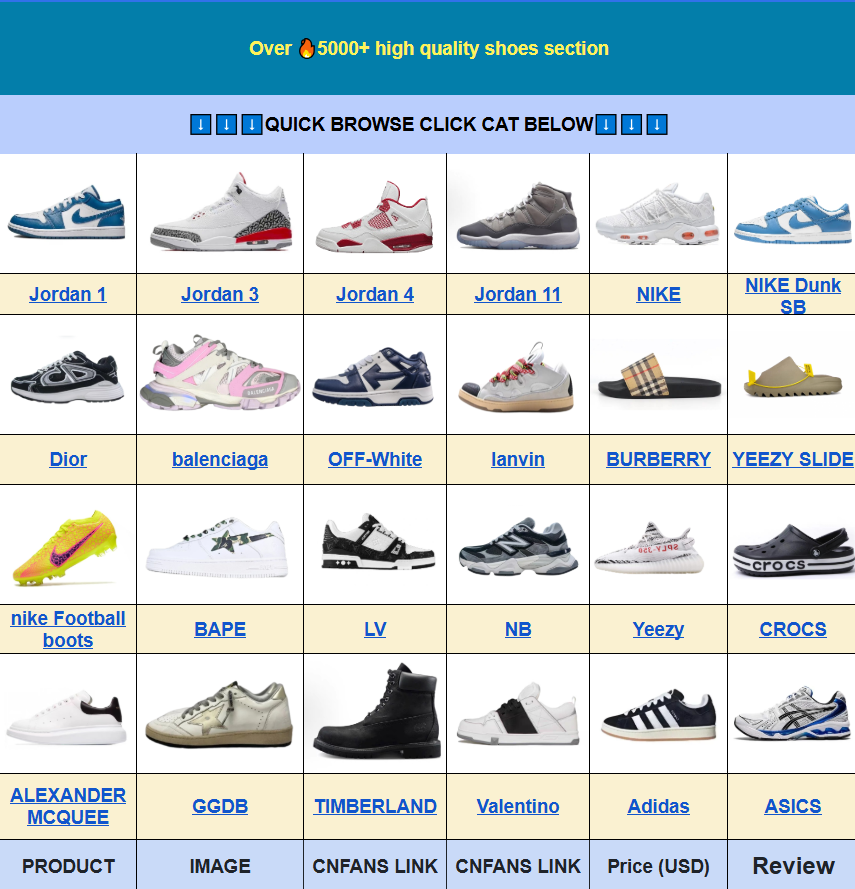
Footwear is another high-traffic area. The litbuy spreadsheet shoes archive groups popular silhouettes and seasonal releases. You will find clear batch identifiers, sole and upper detail shots, and sizing guidance that helps avoid common fit issues. Many users start here when planning a multi-item order because shoes tend to ship well and pair easily with other categories.
Accessories
Accessories often serve as the “add-on” items that complete a haul. Belts, bags, small leather goods, and everyday carry pieces sit in this section. Because they are usually lighter and less expensive, they help balance shipping costs. QC coverage here focuses on hardware quality, stitching consistency, and logo accuracy. The category is updated frequently, so new seasonal pieces appear without requiring a full sheet refresh.
These three areas illustrate the broader strength of the platform: clear organization, consistent QC visibility, and direct paths to order.
How Ordering Actually Works
The process stays straightforward once you understand the external-link model:
- Browse a category or use the search bar with a single keyword.
- Open a product card and review the available QC images and notes.
- Click the purchase link. You are taken to the agent platform with the product information ready.
- Complete payment, choose warehouse services if desired, and arrange international shipping when the item arrives.
Because the website never processes payments, your financial details stay with the established agent. Most users already familiar with shopping-agent workflows find the transition seamless.
Speed and Clear Categories in Practice
Beyond the technical speed gain, the biggest daily benefit is mental clarity. Instead of scrolling endless rows or trying to remember which tab held the right filter, you move through logical sections: jackets, sneakers, hoodies, accessories, and so on. Each section loads independently, so even if the full catalog is large, the page you are viewing stays responsive.
Mobile users notice the difference most. A phone browser that struggled with a heavy Sheet now handles category pages without constant zooming or lag. The search tip at the top of this article is practical advice: short keywords return cleaner results than full sentences.
For first-time visitors, the combination of fast loading, visible QC, and external ordering removes the usual learning curve. You can explore, compare, and decide without needing to master spreadsheet formulas or browser workarounds.
Frequently Asked Questions
Q: Is the Litbuy Spreadsheet website mobile version easy to use? How do I search for items I want to buy?
A: Yes. The pages are responsive and load quickly on phones. Use the search bar with single words such as “SHOES,” “JACKET,” or a brand name. Longer phrases often return fewer useful results.
Q: How is the product quality? Are there QC photos?
A: Most listings include multiple quality-control images taken after the item reaches the agent warehouse. These photos show real construction details rather than marketing shots, so you can evaluate before finalizing an order.
Q: What types of products are available on the website?
A: The catalog covers apparel (jackets, hoodies, T-shirts, pants, jeans), footwear, accessories, headwear, underwear, sets, jerseys, socks, plus specialty sections for watches, perfume, glasses, and Lego. New categories appear as the 2026 batch expands.
Q: Why not use Google Sheets?
A: Large Sheets slow down once they contain thousands of rows and images. The website converts the same data into fast-loading pages, making browsing practical on any device.
Q: What are the international shipping costs and delivery times?
A: Shipping is handled by the purchasing agent, not the spreadsheet site. Costs and transit times vary by destination, package weight, and chosen line. Most agents provide calculators and multiple options once the item is in their warehouse.
Q: What should I do if I receive an unsatisfactory product?
A: Contact the agent’s support team with the order number and photos. Most agents offer standard return or refund procedures for items that fail their quality checks or arrive damaged. The spreadsheet site itself does not process claims.
Q: Is the Litbuy spreadsheet website safe? Does it share user data?
A: The site functions as a discovery catalog and does not collect payment information or require accounts for browsing. It does not sell or share personal data. All transactions occur on the external agent platforms that already follow their own privacy policies.
Q: What are the benefits of using the Litbuy spreadsheet website (smooth operation, clear categories)?
A: Instant page loads, logical category structure, consistent QC visibility, and one-click redirects to order. Together these remove the friction that used to slow down research and decision-making.
Whether you are building a first haul or simply checking current batches, the web format turns a previously cumbersome spreadsheet into a practical daily tool. Start on the homepage, pick a category that matches what you need, and move at your own pace—without waiting for cells to finish loading.